
The Call We Get Every Year Around the First Hard Freeze
A homeowner hits the opener on a 20-degree morning and the door gets about halfway up before it groans, shudders, and stops. Sometimes the opener keeps trying and grinding. Sometimes the safety sensors flash because they've fogged over in the temperature swing between a warm garage and a freezing driveway. When we get out there, it's almost always the same combination of things: hardened old lubricant, a bottom seal that's cracked and brittle, and a torsion spring that's been losing tension all year and finally can't handle the extra strain cold steel puts on it. None of it happens overnight — it builds up all summer and fall and then the first real cold snap exposes it all at once.
Why Pleasant Grove's Weather Is Hard on Garage Doors
This part of Utah doesn't just get cold — it gets big day-to-night temperature swings, dry air, and strong, direct sun at altitude for most of the year before winter sets in. That combination is rough on a garage door system. UV and dry heat make rubber seals and lubricants brittle over the summer, and then the first freeze is what actually cracks or seizes them. Steel contracts in the cold, which tightens tolerances on rollers and tracks and makes springs feel stiffer and more strained than they were in August. None of this is dramatic on its own, but stacked together it's exactly why doors that worked fine in September start acting up in November and December.
Start With the Weatherstripping and Seals
Walk around your door and look at the rubber seal along the bottom and the strips along the sides. If it's cracked, flattened, or pulling away from the track, it's not doing its job anymore. A failed seal lets in cold air, drafts, and snowmelt, which can freeze into a thin sheet of ice right under the door — one of the more common reasons a door won't budge on the first really cold morning. Replacing a bottom seal is inexpensive, generally in the range of a basic hardware item, and it's one of the highest-value things you can do before winter actually arrives.
Lubricate With the Right Product, Not Just Any Spray
Dry air plus cold temperatures thickens cheap or old lubricant until it barely does anything, which is why hinges squeak and rollers bind right when you need them to move smoothly. Skip WD-40 for this — it's a solvent, not a long-term lubricant, and it can actually strip out what grease is left. A silicone-based garage door lubricant on the hinges, rollers, and the track rail (not the springs directly unless the product is made for springs) will hold up much better through the swings between a cold night and a sunny afternoon.
Check the Spring Before the Cold Finds Its Weak Point
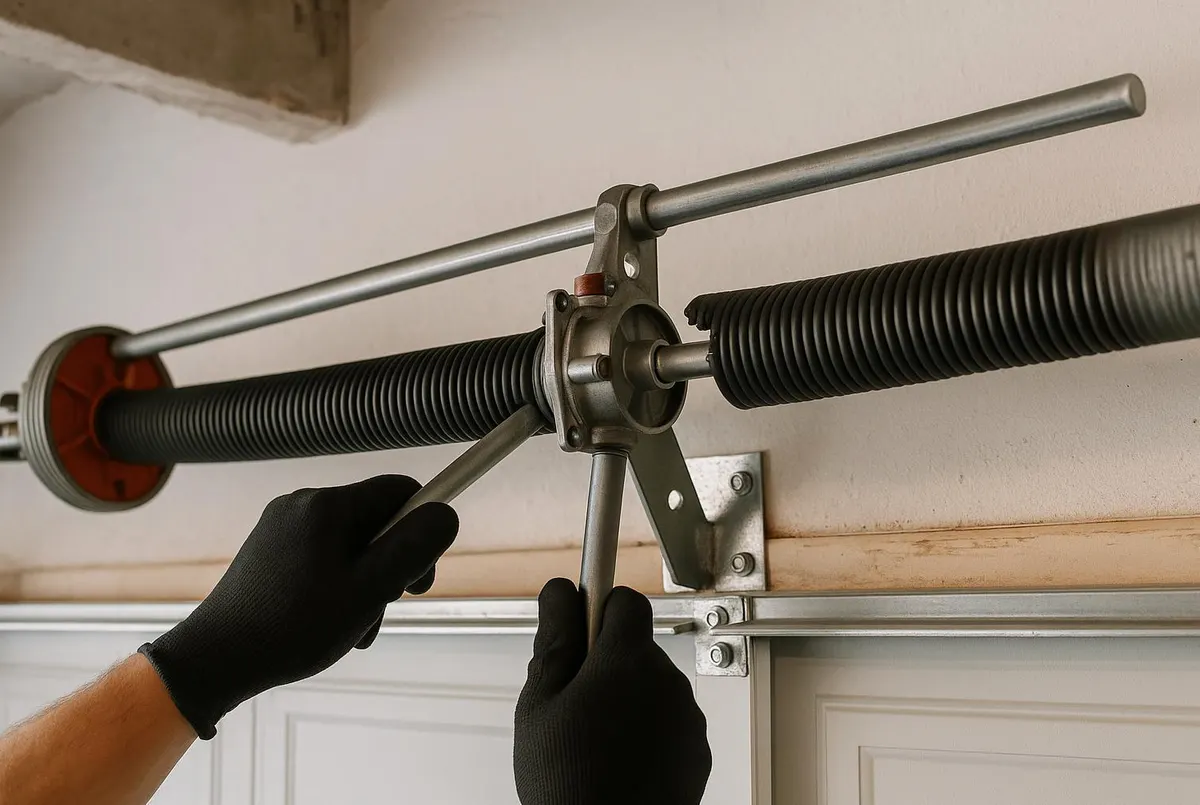
Torsion springs lose tension gradually with every cycle, and cold weather is often what finally pushes a tired spring past its limit. A simple way to check balance: with the opener disconnected (pull the release cord), lift the door about halfway by hand and let go. A properly balanced door will hold its position. If it drops or shoots up, the spring is compensating poorly and is close to the end of its life. Don't wait for a full snap — a spring that lets go on a cold morning when the door is heavier and stiffer than usual is a much more jarring failure, and it can happen while someone's underneath it.
Don't Ignore the Opener and Sensors
Photo-eye sensors near the bottom of the tracks are sensitive to condensation and frost, especially when warm garage air meets a cold door. If your opener reverses for no obvious reason, wipe both sensor lenses and make sure they're still aligned — a bumped sensor is a common, easy fix. It's also worth checking that the opener's force setting hasn't drifted; contracting metal and stiffer lubricant can make the door slightly harder to move, and an opener set too aggressively will just keep straining against it instead of adjusting.
Consider Insulation If the Garage Takes a Beating
With the swing between sunny afternoons and freezing nights that this area gets, an uninsulated steel door radiates cold into the garage and anything attached to it — including a shared wall with living space. If you use the garage as a workshop, for parking a second vehicle you'd like to actually start in January, or it backs up to a bedroom or laundry room, an insulated door or a retrofit insulation kit is worth pricing out before the coldest stretch hits, rather than after you've been living with it all winter.
When Ice and Snow Get Involved
If the door is frozen to the ground after a storm, don't force it with the opener — that's a fast way to strip gears or bend a panel. Clear visible ice with a plastic scraper, never metal, and check that tracks aren't packed with snow or ice before running the door. A door that's fighting ice at the bottom puts extra strain on everything above it, including that spring you just checked.
When to Call Pleasant Grove Garage Door
If your balance test shows a problem, if the seal is too far gone to simply swap yourself, or if the door is making new noises you haven't heard before, that's the point to bring in a technician rather than wait and see. Our Garage Door Maintenance visits cover exactly this kind of pre-winter check — spring tension, hardware, lubrication, sensor alignment — so small issues get caught before a cold morning turns them into a no-go door. And if a spring does let go or a door comes off track during a cold snap, our Emergency Garage Door Service is there for the calls that can't wait until business hours.
If you're in Pleasant Grove, Lindon, American Fork, Orem, Cedar Hills, Highland, Alpine, or Lehi and want your garage door checked before the next hard freeze, give Pleasant Grove Garage Door a call — we'll get it sorted before the cold does any more damage.